
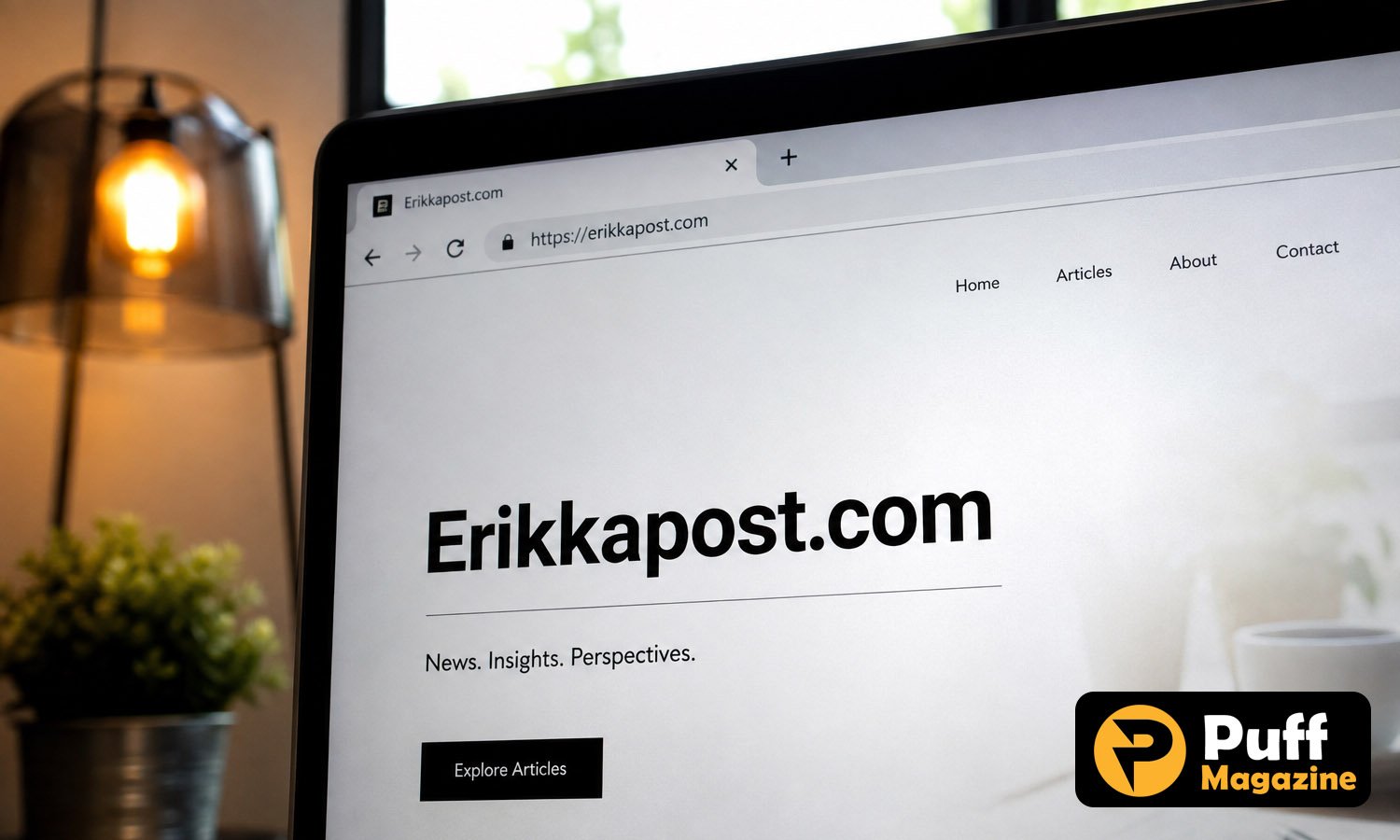
Erikkapost.com is a small, general-interest WordPress blog, not the social media scheduling platform, content management system, or “digital content distribution” tool that several articles online claim it to be. Anyone searching for erikkapost com has likely noticed the same strange pattern: one article calls it a blog, another calls it a centralized publishing platform with automation and analytics, and a third describes it as a scheduling tool for Instagram and TikTok. These descriptions cannot all be accurate at once, and a direct look at the site itself makes clear which version is actually true and which versions were simply invented.
What Erikkapost.com Actually Is
Erikkapost.com is built on WordPress using a free, widely available theme, and it functions as a straightforward, multi-topic content site rather than any kind of specialized software product. Visitors land on an article, read it, and can click through to related posts or browse listed categories, the same basic experience offered by thousands of other small blogs across the internet running similar setups.


The site’s navigation lists broad categories such as Business, Education, Finance, Health, Lifestyle, Real Estate, Technology, and Travel, suggesting a wide-ranging general-interest publication with fairly ambitious scope. In practice, the actual published content skews toward a narrower and more eclectic mix, including hiking guides, card game strategy articles covering games like Teen Patti and Call Break, explanations of Philippine government registration processes, hair care product write-ups, and profiles of K-pop groups.
Posting activity on the site is thin and irregular rather than following a consistent, predictable publishing schedule. At one recent point of review, the most recent article had been published in May 2025, with the prior batch of content dated back to August 2023, leaving a gap of nearly two full years between publishing bursts.
Every post on the site carries the same generic author byline rather than being attributed to named writers with individual bios or credentials, which is a pattern more typical of low-effort, high-volume content sites than of a publication built around dedicated staff writers or subject matter experts with genuine, verifiable expertise.
Why So Many Conflicting Descriptions Exist
The confusion surrounding Erikkapost.com appears to trace back to the name itself and how easily it can be misread. The word “post” naturally suggests a posting or publishing tool to some readers, which may have led certain writers to assume, without actually checking the live site, that it was some kind of software product rather than a simple content blog covering everyday topics.
Once one or two articles described Erikkapost.com as a social media management or content distribution platform, this framing appears to have spread to other sites covering the same search term, with each new article adding further invented detail, dashboards, automation features, analytics, multi-channel publishing, without any of these specific claims tracing back to something actually visible on the site itself when checked directly.
More careful, direct reviews of the site consistently reach the opposite conclusion when they actually take the time to check. Multiple independent write-ups that describe actually visiting the live site, checking its structure, and reviewing its posting history all converge on the same basic finding: Erikkapost.com is a general content blog, not software, and the platform-style claims circulating elsewhere lack any visible supporting evidence on the actual website itself.
This is a useful example of how quickly an inaccurate description can spread once it appears in even a small number of early articles, especially for an obscure site with no official public statement correcting the record or clarifying what it actually is.
What This Means If You’ve Found the Site
If you arrived at Erikkapost.com expecting a social media scheduling tool, a content management platform, or any kind of software product, the mismatch you experienced makes complete sense, since the site simply does not offer any of these things and never appears to have claimed to. There is no dashboard, no login-based publishing tool, and no account system tied to managing content across other platforms anywhere on the actual live site.
For readers who land on the site through a search result and are simply looking to read a specific article, whether about a hiking trail, a card game strategy, or a haircare product, the site functions exactly like the general-interest blog it appears to be, with no unusual technical requirements, paywalls, or hidden functionality beyond standard article browsing and category navigation.
Given the thin, irregular posting schedule and the generic, uncredited author byline used consistently across all published content, readers evaluating the site’s reliability as an information source should apply the same caution they would with any small, low-authority blog: cross-checking any specific factual claims, particularly on topics like government processes or health-related content, against more established, specialized sources with clear editorial accountability.
There is no indication from available information that the site poses any specific safety risk to visitors, but as with any small, general content site with limited transparency about its ownership or editorial process, it is reasonable to treat it as a casual reading source rather than an authoritative reference for research, decision-making, or academic citation purposes.
Should You Trust Content Published on Erikkapost.com?
Beyond simply identifying what Erikkapost.com is, a fair question for anyone who lands there is whether the actual content published on the site can be trusted. This is a separate question from what type of site it is, and it deserves its own honest answer rather than a blanket dismissal or endorsement.
Small, multi-niche blogs like this one typically do not have the depth of subject-matter expertise found on specialized, established publications with dedicated editorial teams. A general content site covering everything from hiking trails to government registration processes to K-pop group profiles is unlikely to have dedicated subject experts reviewing each topic area with the same rigor a specialized outlet would apply to its own narrower focus.
This does not necessarily mean every article on the site is inaccurate, but it does mean readers should apply a healthy degree of independent verification, especially for anything involving official processes, health information, or financial decisions with real consequences. For lighter, more casual content, such as a general hiking guide or a card game strategy overview, the stakes of an inaccuracy are naturally lower than they would be for something like official government paperwork instructions or medical guidance.
The generic, shared author byline used across all content is also worth factoring into this trust assessment. Publications with named, credentialed writers generally offer more accountability, since a specific person’s name and reputation are attached to the accuracy of what gets published, an accountability structure that appears to be absent here.
How to Quickly Evaluate an Unfamiliar Website Like This
Checking a site’s actual navigation and published content directly, rather than relying on a secondhand description found in a search result, is the fastest and most reliable way to determine what a website really is. In Erikkapost.com’s case, simply browsing its category pages and a handful of articles is enough to reveal a general content blog rather than any kind of software platform being marketed to businesses.
Looking at posting frequency and consistency offers another useful signal worth checking. A site with long, unexplained gaps between publishing periods, like the nearly two-year gap observed on Erikkapost.com, is more consistent with a low-effort content site than with an actively maintained software product or a professionally run publication with a dedicated editorial team producing regular content.
Author attribution is worth checking as well when sizing up an unfamiliar site. A site where every single article carries the same generic byline, without individual writer names, bios, or credentials, generally signals a content mill style operation rather than a publication built around named experts or dedicated staff contributors with actual, traceable accountability for what they publish.
Finally, cross-referencing a site’s description across multiple independent sources, while specifically looking for any that describe actually visiting and directly examining the site itself firsthand, rather than simply repeating a claim from another unrelated article, helps separate a verified, firsthand account from content built entirely around secondhand assumptions about an unfamiliar name found in search results.
What This Case Reveals About Search-Driven Confusion
Erikkapost.com illustrates a slightly different pattern from cases involving entirely fictional software or products with no real subject behind them at all. Here, a real, verifiable website exists, but early inaccurate descriptions of what it does appear to have spread across multiple unrelated articles before anyone actually checked the site directly and corrected the record for future readers.
This distinction matters because it shows that even a completely real, harmless website can become the subject of confusing, inconsistent search results if enough content gets published based on assumption rather than direct verification of the underlying facts. The site itself was never the problem; the surrounding secondhand content describing it inaccurately was.
This pattern is a useful reminder that a name alone, especially one that sounds like it could plausibly be a tool or platform based on word association, is not enough to determine what something actually is. Direct verification, actually visiting the site, checking its structure, and reading its real content firsthand, remains far more reliable than trusting a chain of articles that may simply be repeating each other’s unverified assumptions without adding anything new.
For obscure or low-profile websites in particular, where no press coverage, official company statement, or detailed public documentation exists to correct inaccurate claims, this kind of drift between what a site actually is and what gets written about it can persist for a surprisingly long time before anyone directly checks and clarifies the record for other readers to find.
Conclusion
Erikkapost.com is a small, general-interest WordPress blog covering an eclectic mix of everyday topics, not the social media management platform, content distribution system, or CMS that several unrelated articles inaccurately describe it as. The confusion appears to stem from assumptions about the name itself, compounded by articles referencing each other rather than directly examining the actual site’s structure and content. Anyone curious about Erikkapost.com is better served by simply visiting the site and browsing its content firsthand than by relying on the conflicting, unverified platform-style claims currently circulating across unrelated websites.
Frequently Asked Questions
What is Erikkapost.com?
Erikkapost.com is a small, general-interest WordPress blog publishing articles across a wide, eclectic mix of topics, not a software platform, CMS, or social media tool.
Is Erikkapost.com a social media scheduling tool?
No, despite some articles describing it this way, the site has no dashboard, login-based publishing system, or account features for managing content across other platforms.
Why do different websites describe Erikkapost.com so differently?
The confusion likely started with assumptions based on the site’s name, which then spread across other articles that repeated the claim without directly verifying it against the actual live site.
Is Erikkapost.com safe to visit?
There is no indication of a specific safety risk, though as with any small, low-authority blog with limited editorial transparency, factual claims on serious topics should be cross-checked against more established sources.
How can I tell what an unfamiliar website actually is?
Visit the site directly and check its navigation and content, review its posting frequency and author attribution, and look for independent sources that describe actually examining the site rather than repeating secondhand claims.
Explore the latest and discover what’s ahead at Puff Magazine