

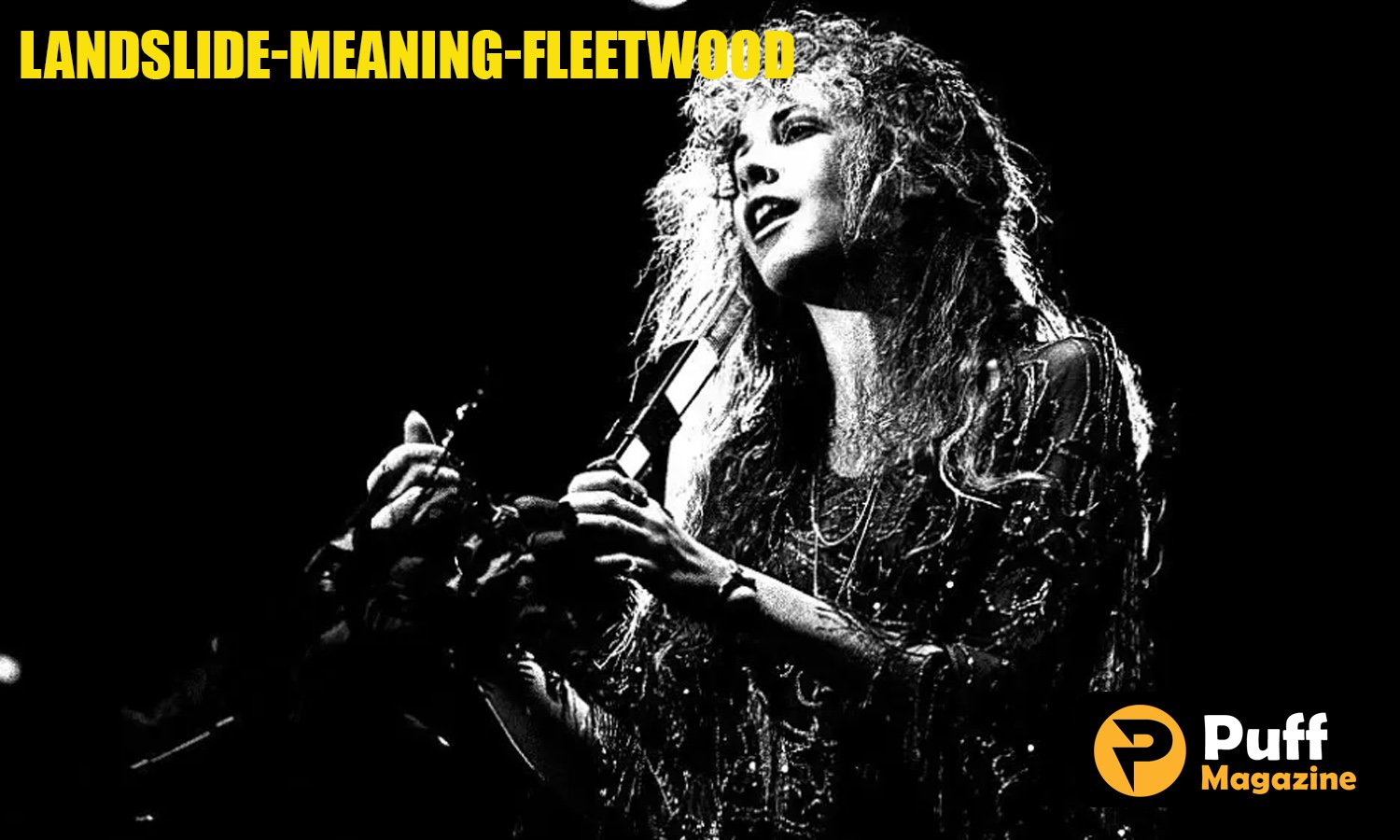
Landslide is one of the most beloved songs Fleetwood Mac ever recorded, and the meaning behind its lyrics has fascinated listeners since it first appeared in 1975. Written and sung by Stevie Nicks, the song uses the image of a literal landslide to describe an emotional turning point in her life, a moment when her career, her relationship, and her sense of self all felt like they were sliding out of her control. Decades later, the song still resonates because that feeling of standing at a crossroads, unsure whether to hold on or let go, is something almost everyone experiences at some point, whether the crossroads involves a career, a relationship, or simply the passage of time itself.
The Story Behind the Song
Stevie Nicks wrote Landslide in 1973 and 1974, before she and Lindsey Buckingham officially joined Fleetwood Mac. At the time, the pair performed together as the duo Buckingham Nicks, and their self-titled album had failed to find commercial success.


While Buckingham left to tour as a backing guitarist for Don Everly, Nicks stayed behind in Aspen, Colorado. She has said in interviews that she spent weeks in a small house surrounded by the Rocky Mountains, working as a waitress and cleaner to help support herself and Buckingham while their music career stalled.
That period of financial strain and uncertainty became the emotional foundation for the song. Nicks has described looking out at the snow-covered mountains and feeling that her entire life, her relationship, her ambitions, her youth, was teetering on the edge of collapse, much like the mountainside itself.
The song later appeared on Fleetwood Mac’s self-titled 1975 album, the first record to feature Buckingham and Nicks as full members of the band. That album became a commercial breakthrough, reaching number one on the Billboard 200 and selling millions of copies worldwide.
What Was Happening in Stevie Nicks’ Life
To understand the song, it helps to know what Nicks was actually deciding during that period. She has explained in multiple interviews that she was weighing whether to continue pursuing music with Buckingham or step away and return to a more stable, conventional path.
Nicks has said she was tired of poverty and tired of waiting tables while trying to build a music career that seemed to be going nowhere. The uncertainty was not only financial. Her relationship with Buckingham was also strained, and she questioned whether their partnership, romantic and musical, could survive.
She has also spoken about the song reflecting her relationship with her father, a business executive, and the influence he had on how she thought about ambition, stability, and taking risks. Rather than pointing to one single meaning, Nicks has described Landslide as a song about the decision to keep going despite doubt.
By the time she finished writing it, she had made up her mind to continue. Within about a year of writing the song, Mick Fleetwood invited Buckingham and Nicks to join Fleetwood Mac, changing the course of both of their lives.
The Meaning Behind the Lyrics
The central image of the song, a landslide, works as a metaphor for sudden, uncontrollable change. Nicks uses the picture of a mountain slope giving way to describe how quickly a stable life can start to feel unstable.
Lines like “I took my love, I took it down, I climbed a mountain and I turned around” describe looking back at everything Nicks had built and questioning whether it was still solid ground. The song’s most quoted line, “time makes you bolder, even children get older,” speaks to the universal experience of aging and the way life keeps moving forward whether or not a person feels ready for it.
The recurring question “Can I handle the seasons of my life?” captures the emotional core of the song. It is not really a song about mountains or snow. It is a song about facing change, growing older, and wondering whether you have the strength to keep choosing your own path when everything around you feels uncertain.
This openness is part of why the song connects with such a wide range of listeners. Some hear it as a song about romantic love, others as a song about family, and others as a song about career and ambition. Nicks herself has offered several explanations over the years, which suggests the song was never meant to have just one fixed meaning.
The imagery of snow and mountains also does more than set a scene. It reinforces the idea of isolation, a single person standing apart from everything familiar and taking stock of her life before deciding which direction to move in next. That sense of solitary reflection, rather than a dramatic confrontation or a clear resolution, is part of what gives the song its quiet, contemplative tone rather than a more theatrical or triumphant one.
Why the Song Still Resonates Today
Landslide did not become an immediate chart-topping hit when it was first released as an album track in 1975. Its popularity grew gradually over the following decades, largely through live performances and its emotional pull as a fan favorite at Fleetwood Mac concerts.
A live version recorded for the band’s 1997 reunion album, The Dance, was released as a single in 1998 and reached the Billboard Hot 100 and Adult Contemporary charts, introducing the song to a new generation of listeners. In 2021, Rolling Stone ranked Landslide at number 163 on its list of the 500 Greatest Songs of All Time.
Part of the song’s lasting appeal comes from its simplicity. Built around an acoustic guitar and Nicks’s voice, it strips away the layered production of many of Fleetwood Mac’s other hits, leaving the lyrics and melody to carry the emotional weight on their own.
The song’s themes, uncertainty, aging, and the courage it takes to keep moving forward, are not tied to any particular era, which is why new listeners continue to discover it and hear their own experiences reflected in it.
Landslide’s Life Beyond Fleetwood Mac
Landslide has been covered by numerous artists over the years, which has helped introduce it to audiences who may not have grown up with the original Fleetwood Mac catalog. Its stripped-down structure makes it a popular choice for acoustic reinterpretations.
The song has also appeared in film and television, further extending its reach. Its use in the 1998 film Practical Magic and its continued presence on major streaming playlists have kept it in regular rotation for listeners of all ages.
More recently, the song saw a fresh surge in popularity after being featured in a major television series, introducing it once again to streaming audiences and pushing it back onto the charts decades after its original release.
That kind of staying power is unusual for a song originally tucked away as an album track rather than released as a single. It speaks to how deeply the lyrics connect with listeners regardless of when they first hear it, and it highlights how a song built on honest, personal songwriting can outlast trends in production style, genre, and even the era it was written in.
Landslide in Fleetwood Mac’s Live Shows
Landslide has held a special place in Fleetwood Mac’s live performances for decades, often introduced by Nicks herself with a brief story about where the song came from. Unlike some of the band’s more elaborately produced hits, Landslide translates easily to a stripped-down stage setting, usually built around acoustic guitar and Nicks’s vocal.
That simplicity is part of why the song became such a consistent highlight of Fleetwood Mac concerts. Audiences often treat it as a communal, almost reflective moment within a set otherwise built around bigger, more upbeat songs like Go Your Own Way or Don’t Stop.
The band’s decision to record a live version for their 1997 reunion album, The Dance, reflected just how central the song had become to their identity as performers. That recording, made in front of a live audience after years of internal band turmoil and lineup changes, carried extra emotional weight, since it marked Buckingham, Nicks, and the rest of the band performing together again after a long period apart.
Following the passing of bandmate Christine McVie in 2022, Landslide took on renewed emotional resonance for fans and surviving band members alike, as tributes and retrospectives on Fleetwood Mac’s history frequently returned to the song as a symbol of the group’s long, complicated journey together.
How Critics and Fans Have Interpreted the Song
Music critics have long pointed to Landslide as an example of confessional songwriting at its most effective, praising Nicks for turning a specific, personal moment of doubt into lyrics broad enough for almost any listener to relate to their own life.
Fan interpretations of the song have varied widely over the years. Some listeners hear it primarily as a song about romantic uncertainty, focusing on lines that seem to question whether a relationship can survive. Others focus on the song’s references to family and aging, hearing it instead as a meditation on how children eventually surpass their parents in age and experience.
This range of interpretation is not a sign of confusion about the song’s meaning so much as evidence of how universally its central themes apply. Few people escape moments where they must decide whether to keep pursuing something uncertain or step back, which is likely why the song continues to surface in conversations about resilience, career changes, and personal growth well outside the context of music criticism.
Nicks herself has embraced this openness in interviews, generally declining to insist on one single, fixed meaning and instead describing the different relationships and moments in her life that fed into the lyrics as she wrote them.
Conclusion
Landslide endures because it captures a feeling almost everyone recognizes: standing at a turning point and wondering whether to hold on or let go. Stevie Nicks wrote it during one of the most uncertain periods of her life, and that honesty still comes through decades later. Whatever meaning a listener takes from it, whether about love, family, or simply growing older, the song’s power lies in how personal it feels every time it is heard, decades after Nicks first wrote it in a small house in the Colorado mountains.
Frequently Asked Questions
What is Fleetwood Mac’s “Landslide” about?
Landslide is about facing major life changes with uncertainty. Stevie Nicks wrote it while deciding whether to continue her music career with Lindsey Buckingham during a period of financial and emotional strain.
Who wrote “Landslide”?
Stevie Nicks wrote Landslide in 1973 and 1974, before she officially joined Fleetwood Mac. It first appeared on the band’s self-titled 1975 album.
Where was “Landslide” written?
Nicks wrote the song while staying in Aspen, Colorado, where she was surrounded by the Rocky Mountains, an image that directly inspired the song’s central metaphor.
Is “Landslide” about Stevie Nicks’ father?
Nicks has said the song reflects several relationships in her life, including her bond with her father, a business executive, alongside her romantic partnership with Lindsey Buckingham.
Why did “Landslide” become popular again years after its release?
A live version released in 1998 introduced the song to a new audience, and it later gained renewed attention after being featured in a popular television series, which brought it back to modern streaming charts.
Explore the latest and discover what’s ahead at Puff Magazine